
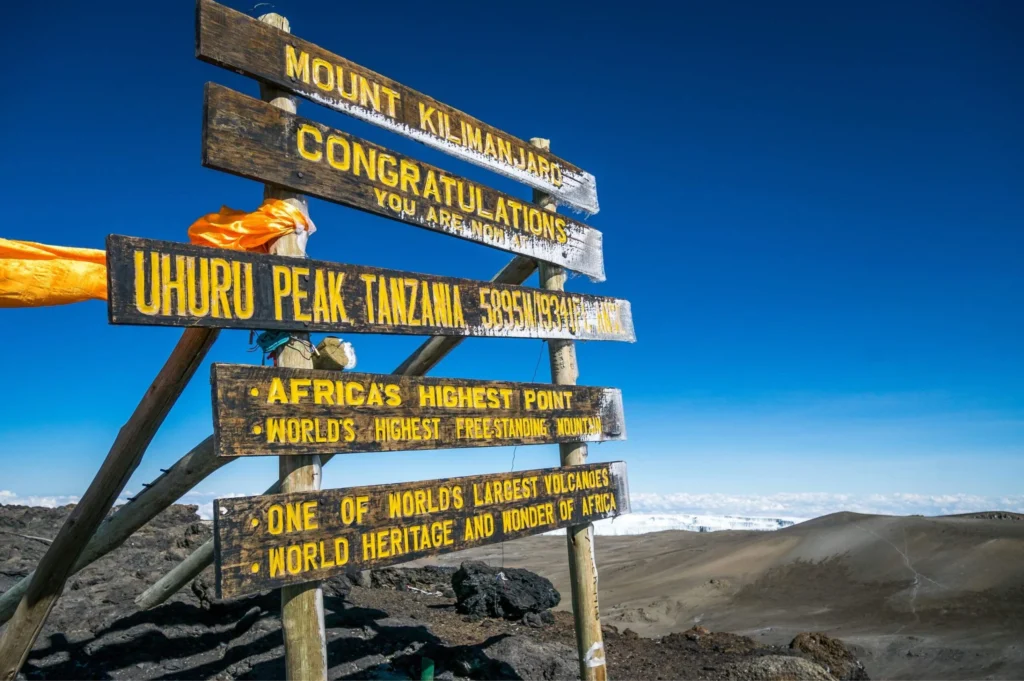
Climbing Kilimanjaro is the experience of a lifetime. Mount Kilimanjaro is the highest mountain in Africa at a staggering 5,895 metres (19,341”), and the world’s highest free-standing mountain. Though many of the mountain’s routes are not for the faint-hearted, with an experienced guide at your side, you certainly don’t need to be an experienced climber to reach its summit.
Kilimanjaro national park is a popular destination for travellers who are up for a challenge. Here we delve into everything you need to know about your Mount Kilimanjaro trek, from our best recommended Kilimanjaro itineraries to how to the practicalities of preparing for the adventure of the lifetime.
Best for beginners Marangu or Machame Routes
Spectacular scenery Lemosho or Machame Routes
Beginners with a budget Marangu Route
For moderate hikers Machame or Lemosho Routes
Expert hikers – Umbwe Route
Most popular Mount Kilimanjaro route – Machame Route
Longest Mt Kilimanjaro route – Northern circuit
During rainy season – Rongai Route
Highest success rate? – 8 days Lemosho Route or 9 days Northern Circuit
here are seven different Kilimanjaro climbing routes to choose from, each with various pros and cons to suit the capabilities of the hiker. They all differ in length, difficulty, scenery, traffic, accommodation and a myriad of varying factors.
The Tanzania Specialist team are experts at defining the best route for your journey, taking all the hassle out of your once-in-a-lifetime trip in Africa. With hundreds of successful summits under our belt from clients from all over the world, we take time to listen to your group’s specific needs and requirements when organising your Kilimanjaro climb. The most popular routes with our clients are the Machame Route, Maranga Route or Lemosho route.
Also known as the “Whiskey Route”, Kilimanjaro’s Machame Route is one the most popular climbing routes in Tanzania. Better yet, this route has a fantastically high success rate. The route has a gradual ascend which gives your body more time to adjust to the altitude. The trail circles around the mountain, offering up spectacular views and a wide variety of landscapes.
During this route, you will walk through the green rainforest to the amazing Shira Plateau. The last ascent to the crater rim at Stella Point is probably the most challenging part of this route and does require at least a basic level of fitness.
How long the Machame Route takes is up to you! It can be done in 6 or 7 days and, in our experience, there is a much higher chance of submitting Africa’s largest mountain on a 7-day Kilimanjaro hike!
PRO: The Machame Route is less expensive than most of the others, due to its shorter route and easy access
CON: This route can be quite busy, especially during the peak season
This route, nicknamed the “Coca-Cola” route, has a reputation for being one of the easiest paths on the mountain. Though it is certainly the shortest route on the mountain, this does not necessarily mean it is the easiest! As this is a shorter route, your body has less time to acclimatize properly, increasing the chances of fatigue and ultimately decreasing the chances of reaching the summit on this route.
Some climbers prefer this route because of the hut accommodation, in contrast to camping in tents as is seen on the majority of other mountain treks. Unfortunately, this also means less privacy! (Plus, there’s nothing like camping out under African skies!). The Marangu Route is the best for those on a budget and is one of the cheapest routes to reach the top of Kilimanjaro.
PRO: The Marangu Route is one of the cheapest and quickest Mount Kilimanjaro routes. This route also offers hut accommodation in dorm rooms – a benefit for those looking to stay away from camping!
CON: This route can be quite busy, especially during the peak season. As you will do the same trail for your descent as you did for your ascent, you get to see less of the spectacular scenery!
Better yet, the Lemosho trail is completely unspoiled, making for a breathtakingly beautiful adventure up to the famous Shira Plateau. After a few days, the Lemosho Route joins the Machame Route at Lava Tower. You can do this route in 7 or 8 days, and it does require a decent level of fitness!
CONS: Lemosho is undoubtedly a more expensive route – it’s a long trail and requires extra transport to the other side of the mountain.
PROS: The price is definitely worth it! The Lemosho route gives climbers plenty of time to acclimatize properly, the views are spectacular and the success rates to reach the summit are high. This is one of the most beautiful and complete routes to climb Kilimanjaro.
Approaching Kilimanjaro from the north near the Kenyan border, the Rongai Route offers a unique perspective of the mountain. The trail usually takes 6 to 7 days and is known for its drier climate and peaceful wilderness. While it’s less scenic than other routes initially, the sense of solitude and gradual ascent make it an attractive option for those seeking a more remote journey to the summit.
The Northern Circuit is the longest route on Kilimanjaro, taking 8 to 9 days. It offers panoramic views from every angle of the mountain and provides excellent acclimatization opportunities. This route is ideal for those who want the best chance of summiting while avoiding the crowds. The journey is serene, scenic, and offers a deep connection with nature all the way to the top.
Climbing Mount Kilimanjaro is a year-round experience. At Tanzania Specialist, we provide expert advice on the best time for you to plan your Kilimanjaro trip based on your individual requirements.
The two main climbing seasons are the dry months from December to March and from June to October. The warmest months are from December to March. During these months the skies are clearer and there is less chance of snow on the trail. February is the best month since the temperature is high and the chances of rainfall are low. From June to October, the temperatures on the mountain are noticeably colder and the trails are busier.
Domesticated animals (goats, cows, chickens)
Occasional sightings of monkeys near the forest edge
Lush farmlands, banana groves, coffee plantations
Rural villages of the
Blue monkeys, black-and-white colobus monkeys, and bush babies
Many bird species, such as turacos, hornbills, and sunbirds
Occasionally seen: bushbucks and duikers
Chagga people
Local markets and cultural activities
Start planning your dream safari to Lake Manyara today with Summer Winter Adventures! Whether you’re interested in a relaxing game drive, a thrilling tree-top walk, or cultural immersion, we offer personalized safari packages to suit every type of traveler.

WhatsApp us