
7-Day Successful Climbing Kilimanjaro via Lemosho
The Route is one of the most scenic ways to climb https://www.tanzaniaparks.go.tz/nationalparks/kilimanjaro. It approaches the mountain from the western side, beginning in the rainforest before crossing the beautiful Shira Plateau and joining the southern circuit toward Barranco, Karanga and Barafu. The climb finishes with the summit attempt at Uhuru Peak and a descent through the Mweka Route.
This itinerary is designed for climbers who want a well-paced seven-day climb while allowing time for gradual altitude adjustment. The summit day remains demanding, so good preparation, a slow walking pace and careful attention to your guide’s instructions are important.
Safari Overview
- Route: Lemosho Route
- Duration: 7 Days / 6 Nights on the mountain
- Starting Point: Londorossi Gate / Lemosho Trailhead
- Summit: Uhuru Peak – 5,895 m
- Highest Camp: Barafu Camp – approximately 4,600–4,700 m
- Descent Route: Mweka Route
- Accommodation: Mountain tents
- Difficulty: Challenging
- Best for: Fit hikers and trekkers who can manage several consecutive days of walking at high altitude
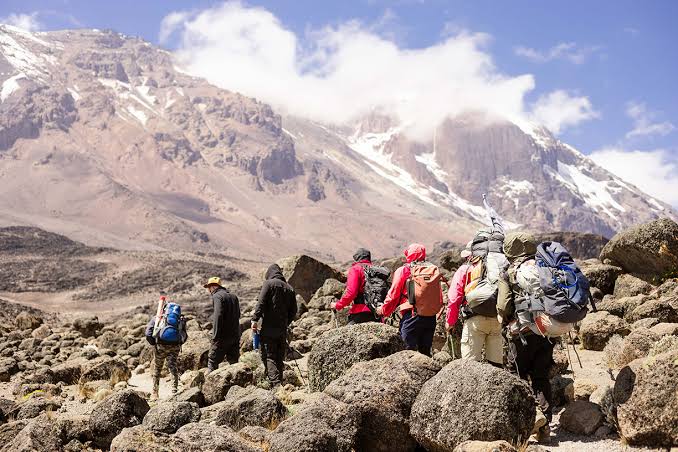
Day 1: Arusha/Moshi – Londorossi Gate – Mti Mkubwa (Big Tree) Camp
Elevation: approximately 2,100 m to 2,750 m
Distance: about 6 km
Walking Time: 3–4 hours
Habitat: Montane rainforest
Overnight: Mti Mkubwa (Big Tree) Camp
Meals: Lunch and Dinner
After breakfast, you will leave Arusha or Moshi and drive towards the western side of Mount Kilimanjaro. The journey takes you through rural villages and farmland before reaching Londorossi Gate, where the climbing team completes the park registration and entry formalities.
From the gate, you continue by vehicle towards the Lemosho trailhead. After a short briefing and lunch, the trek begins.
The first section of the route passes through thick montane rainforest. The trail is peaceful and relatively quiet, with tall trees, moss-covered branches and plenty of birdlife. Depending on the season, you may also see black-and-white colobus monkeys.
The first hiking day is intentionally moderate. The goal is to start the climb comfortably rather than use too much energy at the beginning of the expedition.
You arrive at Mti Mkubwa Camp, also known as Big Tree Camp, in the afternoon. Your mountain crew will have prepared the campsite while you settle in and enjoy a warm dinner.
Overnight: Mti Mkubwa Camp.
Day 2: Mti Mkubwa Camp – Shira 1 Camp
Elevation: approximately 2,750 m to 3,500–3,600 m
Distance: about 8 km
Walking Time: 5–6 hours
Habitat: Rainforest, heath and moorland
Overnight: Shira 1 Camp
Meals: Breakfast, Lunch and Dinner
Wake up early, have breakfast and begin the second day of the climb.
The trail continues through the forest before gradually becoming more open. As you gain altitude, the vegetation changes from dense forest to heath and moorland, with giant heathers, grasses and volcanic rocks becoming more common.
This is a noticeable change from the first day. The forest eventually gives way to wider views of the mountain and the surrounding landscape. On a clear day, you may begin to see the western slopes of Kibo and the Shira Plateau.
The walking pace remains slow and steady. Your guide will encourage you to conserve energy and drink water regularly.
After several hours of hiking, you reach Shira 1 Camp, located on the edge of the Shira Plateau. This is a beautiful area with expansive views and a very different landscape from the rainforest below.
After arriving at camp, take time to rest, eat and enjoy the surroundings.
Overnight: Shira 1 Camp.
Day 3: Shira 1 Camp – Shira 2 Camp
Elevation: approximately 3,500–3,600 m to 3,800–3,900 m
Distance: about 8 km
Walking Time: 4–5 hours
Habitat: Moorland and alpine landscape
Overnight: Shira 2 Camp
Meals: Breakfast, Lunch and Dinner
Today you cross the spectacular Shira Plateau, one of the highlights of the Lemosho Route.
After breakfast, the trail continues across open moorland. The walking is generally less steep than on some of the later sections, giving you an opportunity to enjoy the scenery while allowing your body to continue adjusting to the increasing altitude.
The views become more impressive as you move across the plateau. Depending on weather conditions, you may have excellent views towards Kibo and the surrounding volcanic landscape.
The route eventually reaches Shira 2 Camp, where you spend the night.
The afternoon is a good opportunity to relax, take photographs and prepare for the more demanding days ahead. Your guide will monitor how everyone is responding to the altitude.
Eat well, drink plenty of water and get as much rest as possible.
Overnight: Shira 2 Camp.
Day 4: Shira 2 Camp – Lava Tower – Barranco Camp
Elevation: Shira 2 approximately 3,800 m → Lava Tower approximately 4,600 m → Barranco approximately 3,900 m
Distance: about 10–12 km
Walking Time: 6–8 hours
Habitat: Alpine desert
Overnight: Barranco Camp
Meals: Breakfast, Lunch and Dinner
Today is one of the most important acclimatization days of the climb.
You leave Shira 2 after breakfast and begin walking towards Lava Tower, a prominent volcanic rock formation on the southern side of Kibo. The trail gradually climbs into the alpine desert zone, where the landscape becomes more barren and the air noticeably thinner.
You will reach an altitude of around 4,600 m at Lava Tower before beginning the descent towards Barranco Camp. This climb-high-and-descend approach gives your body valuable exposure to higher altitude while you sleep considerably lower that evening.
Lunch may be taken around the Lava Tower area before continuing down the trail.
As you descend towards Barranco, the scenery changes again. Giant groundsels and other high-altitude plants appear around the valley, creating one of the most distinctive landscapes on Kilimanjaro.
By late afternoon, you reach Barranco Camp, positioned beneath the impressive Barranco Wall.
After dinner, you should rest well because the following morning begins with the climb of the Barranco Wall.
Overnight: Barranco Camp.
Day 5: Barranco Camp – Barranco Wall – Karanga Camp
Elevation: approximately 3,900 m to 4,035 m
Distance: about 5–7 km
Walking Time: 4–5 hours
Habitat: Alpine desert
Overnight: Karanga Camp
Meals: Breakfast, Lunch and Dinner
The day begins with one of the most memorable sections of the Lemosho Route: the Barranco Wall.
After breakfast, you leave camp and approach the wall. Although it looks intimidating from below, the route is a trekking and scrambling section rather than a technical rock-climbing pitch. Your guide will show you where to place your feet and hands as you make your way upward.
Once above the wall, you are rewarded with spectacular views across the Barranco Valley and towards Kibo.
The trail then continues through a series of valleys and ridges. There are several short ascents and descents before reaching the Karanga Valley.
This is a relatively short hiking day compared with the days around it, giving you time to recover and prepare for the final push towards the summit.
You arrive at Karanga Camp in the afternoon. After lunch, spend the rest of the day resting, hydrating and preparing your summit equipment.
Overnight: Karanga Camp.
Day 6: Karanga Camp – Barafu Camp – Uhuru Peak – Mweka Camp
Elevation: Karanga approximately 4,035 m → Barafu approximately 4,600–4,700 m → Uhuru Peak 5,895 m → Mweka approximately 3,100 m
Distance: approximately 15–17 km combined
Walking Time: 12–16+ hours
Habitat: Alpine desert and Arctic zone
Overnight: Mweka Camp
Meals: Breakfast, Lunch and Dinner
Summit Day
This is the longest and most demanding day of the entire climb.
You begin the morning by hiking from Karanga towards Barafu Camp, the main starting point for the summit attempt. The trail becomes increasingly rocky and steep as you enter the high alpine desert.
After reaching Barafu Camp, you have an early meal and spend some time resting. Your guides will check your equipment and prepare you for the summit attempt.
Most teams begin the summit climb around midnight.
You leave Barafu in darkness, walking slowly under the stars. The trail is steep and the altitude makes every step more difficult. The key is to maintain a very slow and steady pace.
The route takes you towards Stella Point on the crater rim at approximately 5,739 m. Reaching Stella Point is a major achievement, but the final section to Uhuru Peak still remains.
From Stella Point, you continue around the crater rim towards Uhuru Peak, the highest point in Africa at 5,895 m.
Uhuru Peak – 5,895 m
Once you reach the summit, take time to celebrate your achievement and enjoy the incredible views if weather conditions allow. Your guide will help you take photographs before you begin the descent.
The descent back towards Barafu is much quicker than the ascent, although it can still be physically demanding. After a short rest and meal at Barafu, continue down towards Mweka Camp.
The descent brings you into a lower and more comfortable altitude. By the time you reach Mweka Camp, you will have completed the most demanding part of your Kilimanjaro adventure.
Dinner will be served at camp, followed by a well-earned night’s rest.
Overnight: Mweka Camp.
Day 7: Mweka Camp – Mweka Gate – Arusha/Moshi
Elevation: approximately 3,100 m to 1,600 m
Distance: about 10 km
Walking Time: 3–4 hours
Habitat: Rainforest
Meals: Breakfast and Lunch
After breakfast, you begin the final descent through the lush rainforest.
Compared with summit day, today’s walk is much easier. The trail gradually descends through thick vegetation, with the cool forest providing a pleasant contrast to the barren high-altitude environment experienced during the summit climb.
After several hours, you reach Mweka Gate, where you complete the park exit procedures.
Successful climbers normally receive their Kilimanjaro summit certificates after completing the required registration and descent procedures.
Your vehicle will then meet you at the gate and transfer you back to Arusha or Moshi. Upon arrival at your hotel, you can enjoy a hot shower, a proper bed and some well-deserved relaxation.
End of the 7-Day Lemosho Route Kilimanjaro Climb. book your trekking trip with https://summerwinteradventures.com/
Route Summary
| Day | Route | Approx. Elevation | Hiking Time |
|---|---|---|---|
| Day 1 | Londorossi Gate – Mti Mkubwa Camp | 2,100 m → 2,750 m | 3–4 hrs |
| Day 2 | Mti Mkubwa – Shira 1 | 2,750 m → 3,500–3,600 m | 5–6 hrs |
| Day 3 | Shira 1 – Shira 2 | 3,500 m → 3,800–3,900 m | 4–5 hrs |
| Day 4 | Shira 2 – Lava Tower – Barranco | 3,800 m → 4,600 m → 3,900 m | 6–8 hrs |
| Day 5 | Barranco – Karanga | 3,900 m → 4,035 m | 4–5 hrs |
| Day 6 | Karanga – Barafu – Uhuru Peak – Mweka | 4,035 m → 5,895 m → 3,100 m | 12–16+ hrs |
| Day 7 | Mweka – Mweka Gate – Arusha/Moshi | 3,100 m → 1,600 m | 3–4 hrs |
Why choose Lemosho Route?
The 7-Day Successful Climbing Kilimanjaro via Lemosho Route is popular because it combines scenery, a quieter western approach and a gradual progression through Kilimanjaro’s different ecological zones. It begins in the rainforest, crosses the Shira Plateau and later joins the southern circuit before the summit.
The route also uses the Mweka Route for descent, meaning you do not simply retrace the same trail all the way back down. This gives you a greater variety of scenery throughout the climb.
What Makes This a Successful Climb?
Walk slowly: The famous Kilimanjaro principle of pole pole is important. A slow pace helps conserve energy and gives your body more time to adjust to altitude.
Stay hydrated: Drink regularly throughout the day, even when you do not feel particularly thirsty.
Eat well: Take your meals seriously. Your body needs enough calories to cope with several consecutive days of trekking.
Listen to your guide: Guides monitor climbers throughout the route and can identify early signs that someone is struggling with altitude.
Rest properly: Once you reach camp, focus on eating, drinking, recovering and preparing for the next day.
Prepare for the summit: Summit night is cold, dark and physically demanding. Good clothing, suitable footwear, gloves, headlamp and adequate hydration are essential.
Be mentally prepared: Reaching Uhuru Peak is not only a physical challenge. The final ascent requires patience, determination and a willingness to keep moving at a steady pace.
Important: Seven days on Lemosho is a challenging schedule. An eight-day Lemosho itinerary adds more time for acclimatization and is commonly recommended for climbers who want a less compressed ascent.
Recommended Trekking Gear
with theLemosho Route You should arrive properly equipped for conditions ranging from warm rainforest temperatures to freezing conditions near the summit. Essential equipment includes:
- Waterproof hiking boots
- Thermal base layers
- Fleece or warm mid-layer
- Insulated summit jacket
- Waterproof jacket and trousers
- Warm hat and sun hat
- Gloves and thermal gloves
- Hiking trousers
- Good-quality hiking socks
- Headlamp with spare batteries
- Trekking poles
- Sunglasses
- Sunscreen and lip balm
- Water bottles or hydration system
- Sleeping bag suitable for freezing temperatures
- Daypack and duffel bag
- Personal first-aid items
- Toiletries and personal medication
Note: Distances, camp elevations and hiking times can vary slightly between operators and depending on the exact trail and weather conditions. The itinerary above follows the commonly used seven-day Lemosho arrangement.
